Tatiana Abramova, an artist with a background in architecture, shares her decade-long journey of finding her path, why she chose oil painting and the palette knife, and what makes interior painting special.
Who are you and what do you do?
My name is Tatiana Abramova. I'm an artist with an architectural background, working primarily in oil on canvas.
At the age of 17, I decided to become an architect-designer. I knew almost nothing about the profession at the time — there wasn't a single example in my circle. The decision was intuitive, but it turned out to be the right one: I truly enjoyed studying at the architecture and civil engineering university.
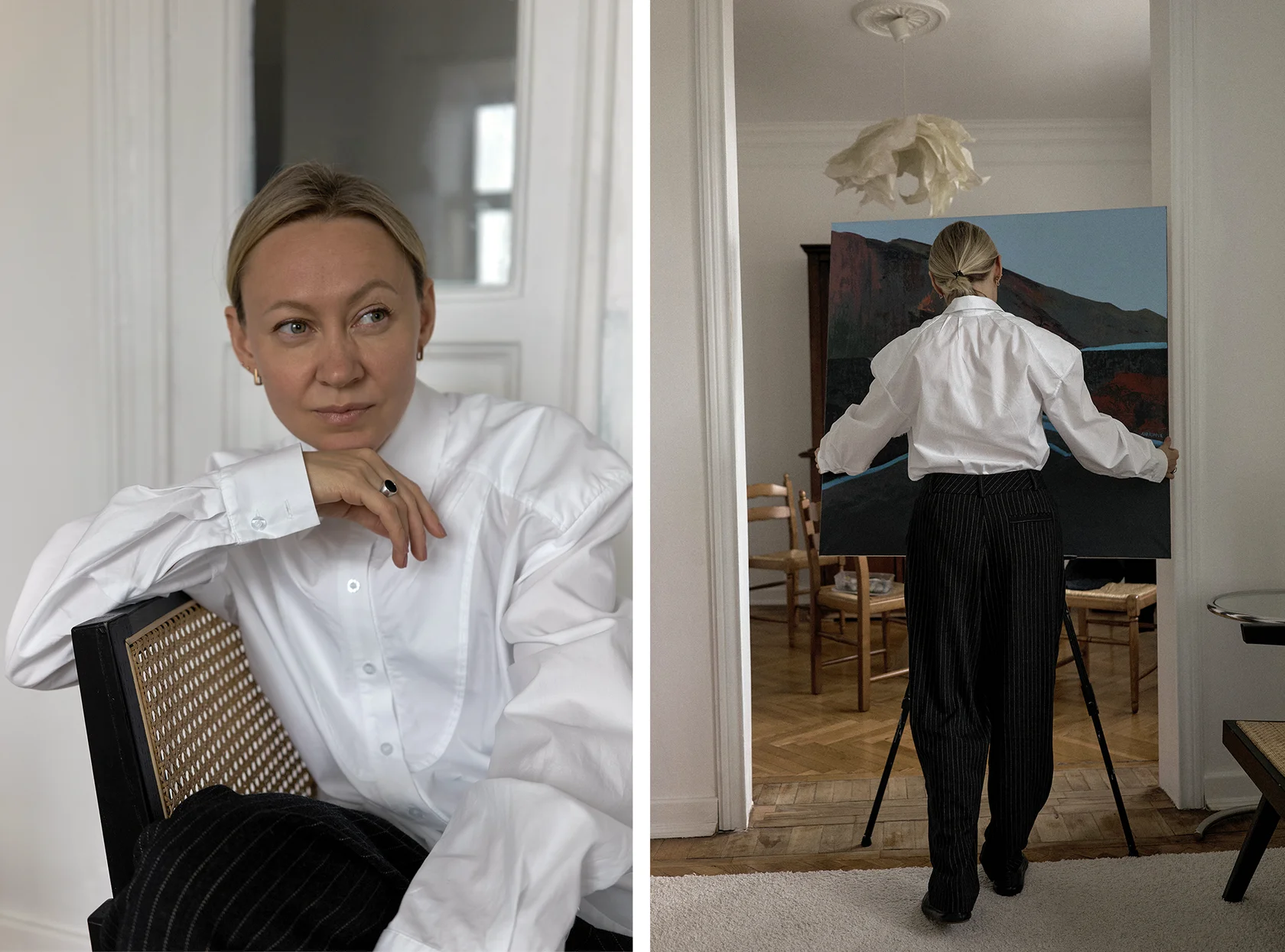
I was drawn to the process itself — design, material selection, working with color, 3D visualization, and graphic design. But drawing captivated me most of all. It felt like the most interesting and exciting process.
The journey to becoming an artist took over ten years. I tried many things to find the right profession. Sometimes I felt confined by a single occupation, other times I was unbearably bored.
Now I dedicate myself exclusively to painting. And I feel that I have finally found my place.
What techniques do you work in? What key themes do you explore?
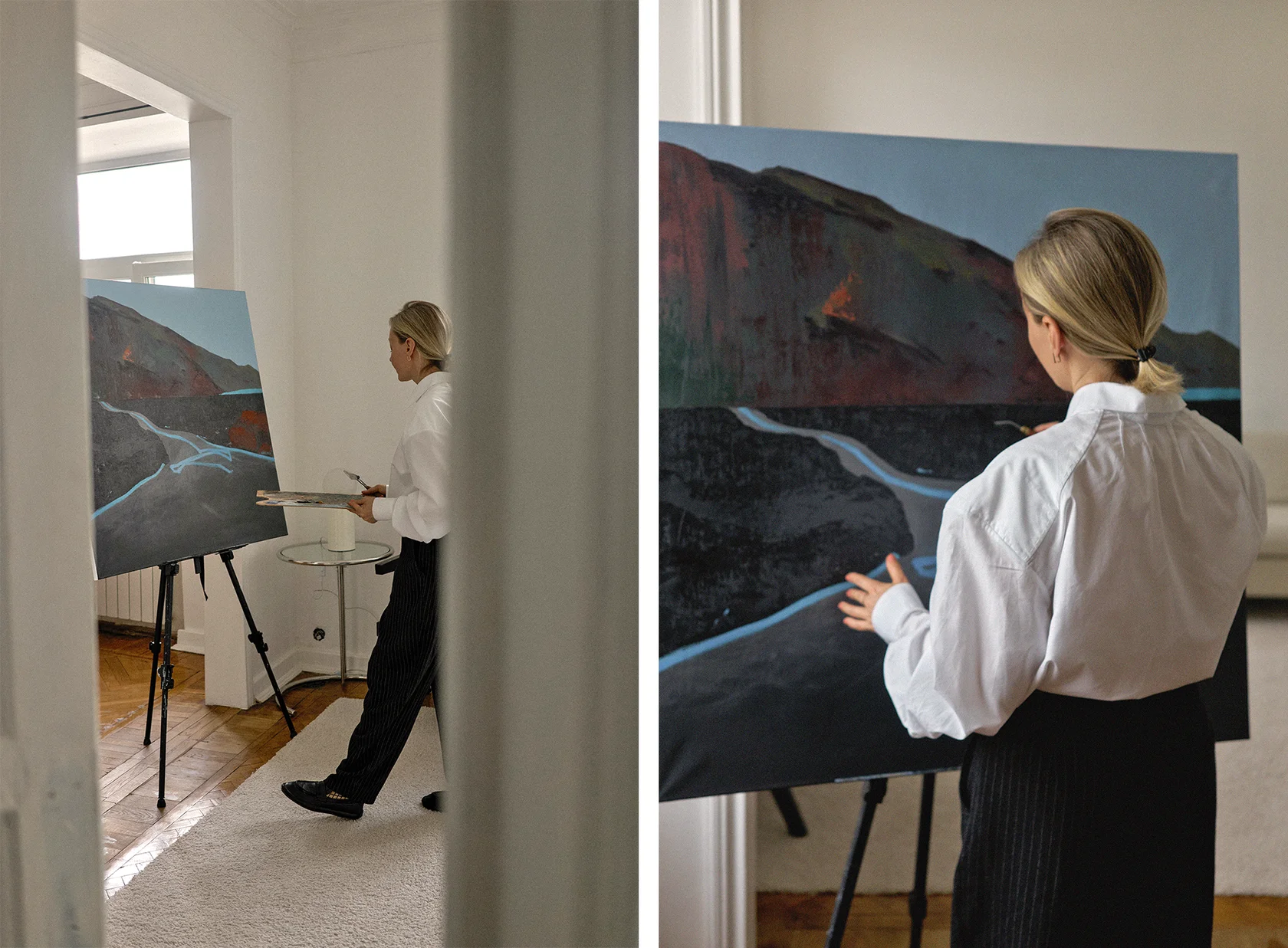
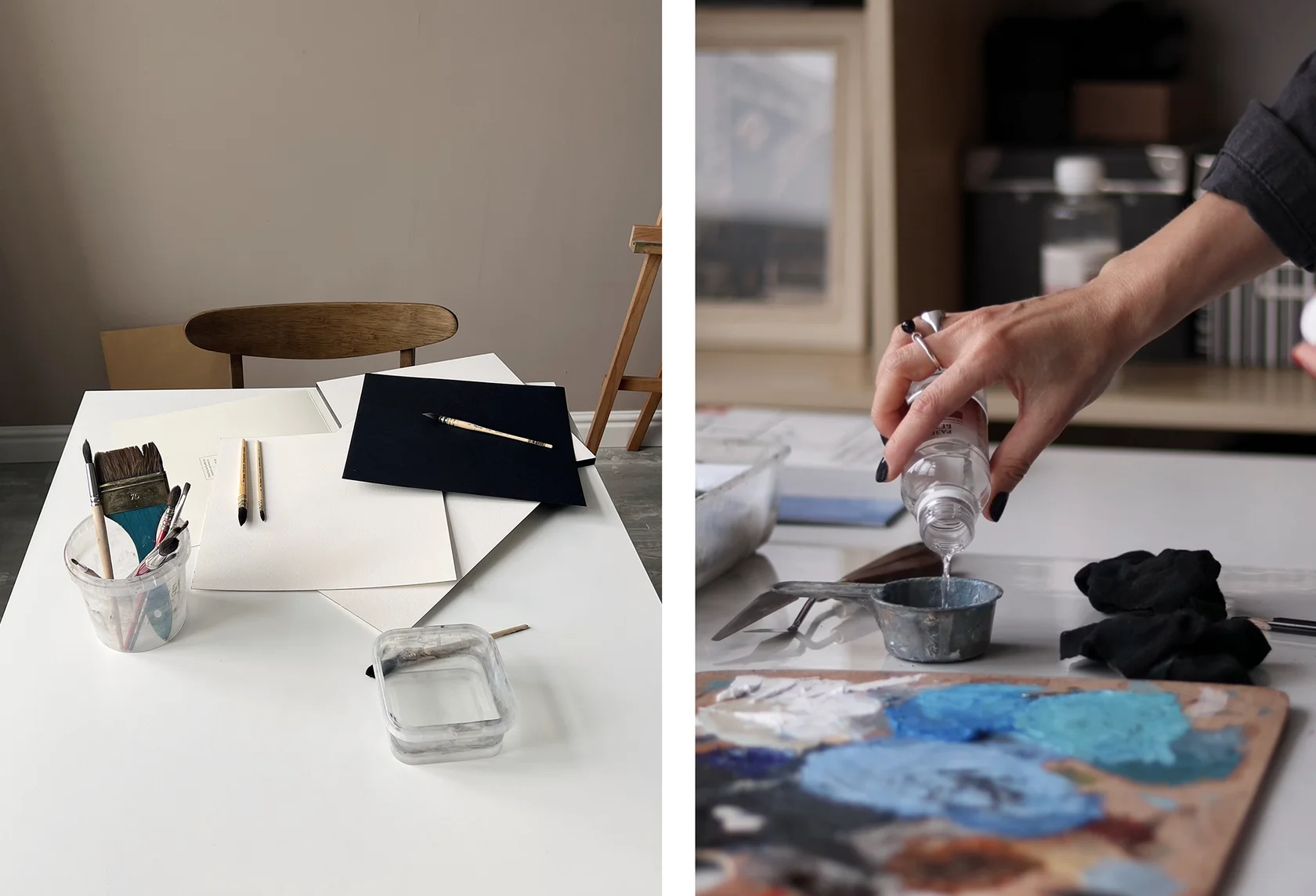
I work in oil on canvas, primarily using a palette knife. I sometimes use a brush, but the main tool is the palette knife. It allows me to cover large surfaces quickly while leaving a lively, expressive texture. The strokes are dense, with beautiful color transitions.
As for themes… I'm drawn to the interaction between architecture and nature. I enjoy exploring this balance, finding harmony in space, and the contrast between precise geometry and the living chaos of organic forms.
What interests me most is how architecture affects the landscape and nature. How we try to control it, what we consider beautiful, and the consequences of a designed landscape.
The main themes in my works are:
- landscapes where strict forms intertwine with organic shapes;
- contemporary architecture in the context of the natural landscape;
- less frequently, portraits
How has your style changed over time?
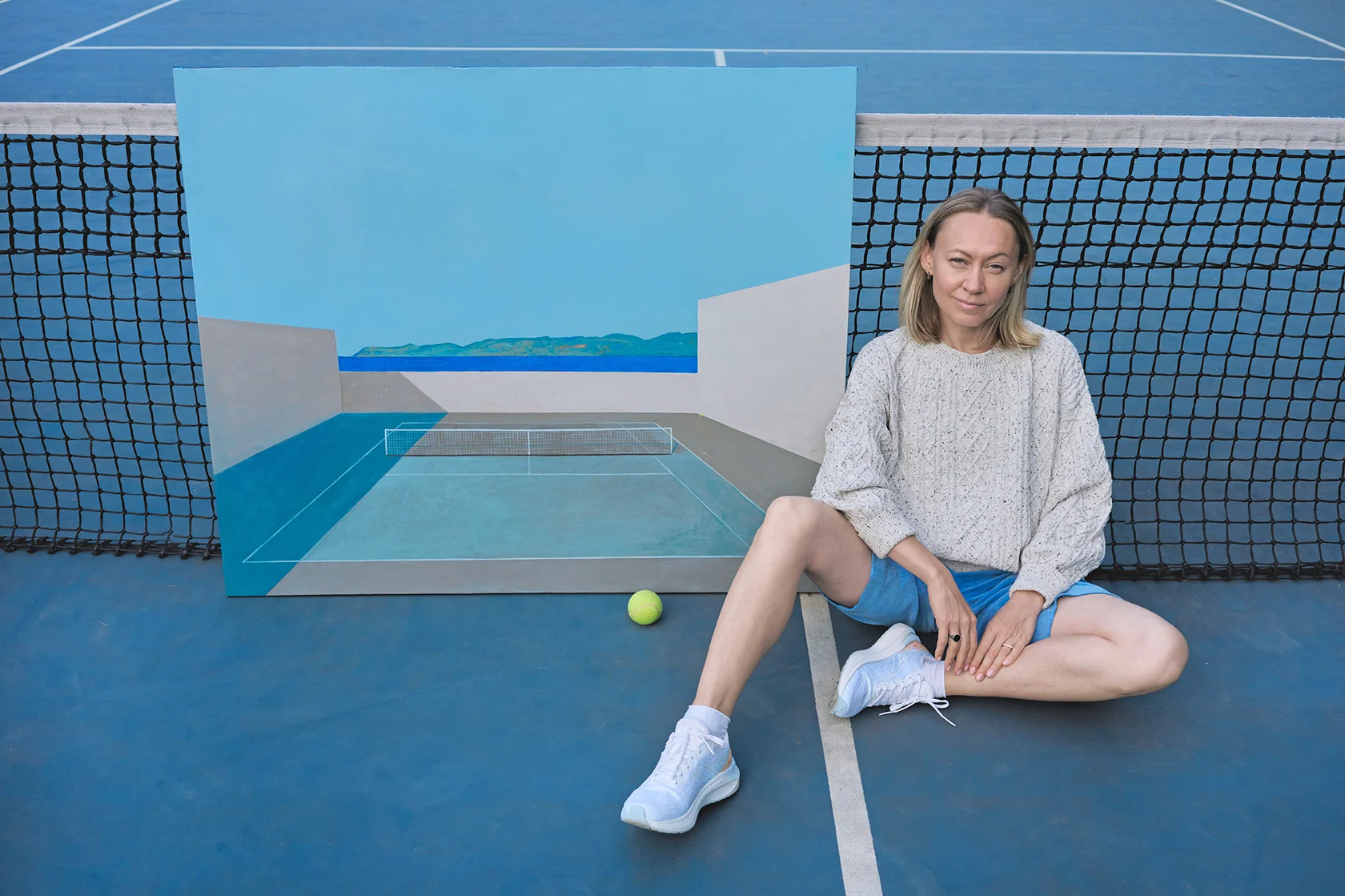
Over time, my palette has become more restrained and deeper. The subjects have also evolved — I've added themes of sports and park landscapes.
My painting style remains recognizable, but my hand has become more confident.
Can you tell us about your creative process? How long does it take? How do you know when a painting is finished?
It all begins with a sketch. I use computer programs like Photoshop — combining photographs, textures, and other visual elements. I often merge several images to find the right angle, composition, and color scheme.
Then I transfer the sketch to canvas according to the concept. I work from dark to light, from large forms to details. I observe the work as it grows and may add or change the initial sketch during the process.
I like to work quickly — I want to see the result without putting it off. Sometimes a painting is born in a day or two. It can't be faster — there are technical nuances and an internal rhythm that cannot be rushed.
A painting is considered finished when looking at it brings a pleasant inner satisfaction with the result.
Who has had the greatest influence on you and why?
It's hard to say exactly. It's not one artist, not one event. My direction formed gradually — through many impressions, observations, and inner responses. From the outside, perhaps it's more visible who influenced me.
But there are names whose work particularly resonates with me:
Richard Diebenkorn — for his sense of space.
Mark Rothko — for the depth of color.
Alex Katz — for his conciseness.
Giorgio Morandi — for his silence.
Lucian Freud — for his honesty.
Wayne Thiebaud, David Hockney, Andrew Wyeth — each inspires me in their own way.
Richard Diebenkorn — for his sense of space.
Mark Rothko — for the depth of color.
Alex Katz — for his conciseness.
Giorgio Morandi — for his silence.
Lucian Freud — for his honesty.
Wayne Thiebaud, David Hockney, Andrew Wyeth — each inspires me in their own way.
What personal qualities would you highlight?
I really value structure and order in both work and daily life. Order as a way to achieve calm — through it comes freedom.
I don't just depict architecture in nature. I create a space where the viewer can feel calmer, quieter, and a little more able to collect their thoughts.
My values are space, order, light, silence, clarity, and the absence of excess.
What inspires you at the moment?
At the moment — swimming pools. There are certain feelings and moods that arise through paintings of pools — calmness and depth.
How would you describe your work in three words?
- Minimalist,
- Contrasting,
- Organic.
Do you work on commission?
I have created several copies of works by world-renowned artists on commission — including works by Claude Monet, Marc Chagall, and Egon Schiele.
It was a fascinating and valuable experience. Working within someone else's palette and style is a true exercise for both hand and eye. It broadens your horizons — both as an artist and as a researcher.
There have also been personalized commissions for private clients. I painted a series for a restaurant and collaborated with a St. Petersburg-based company that wants to expand its product line and create design objects with artists.
Do you work with other materials or do you use only oil?
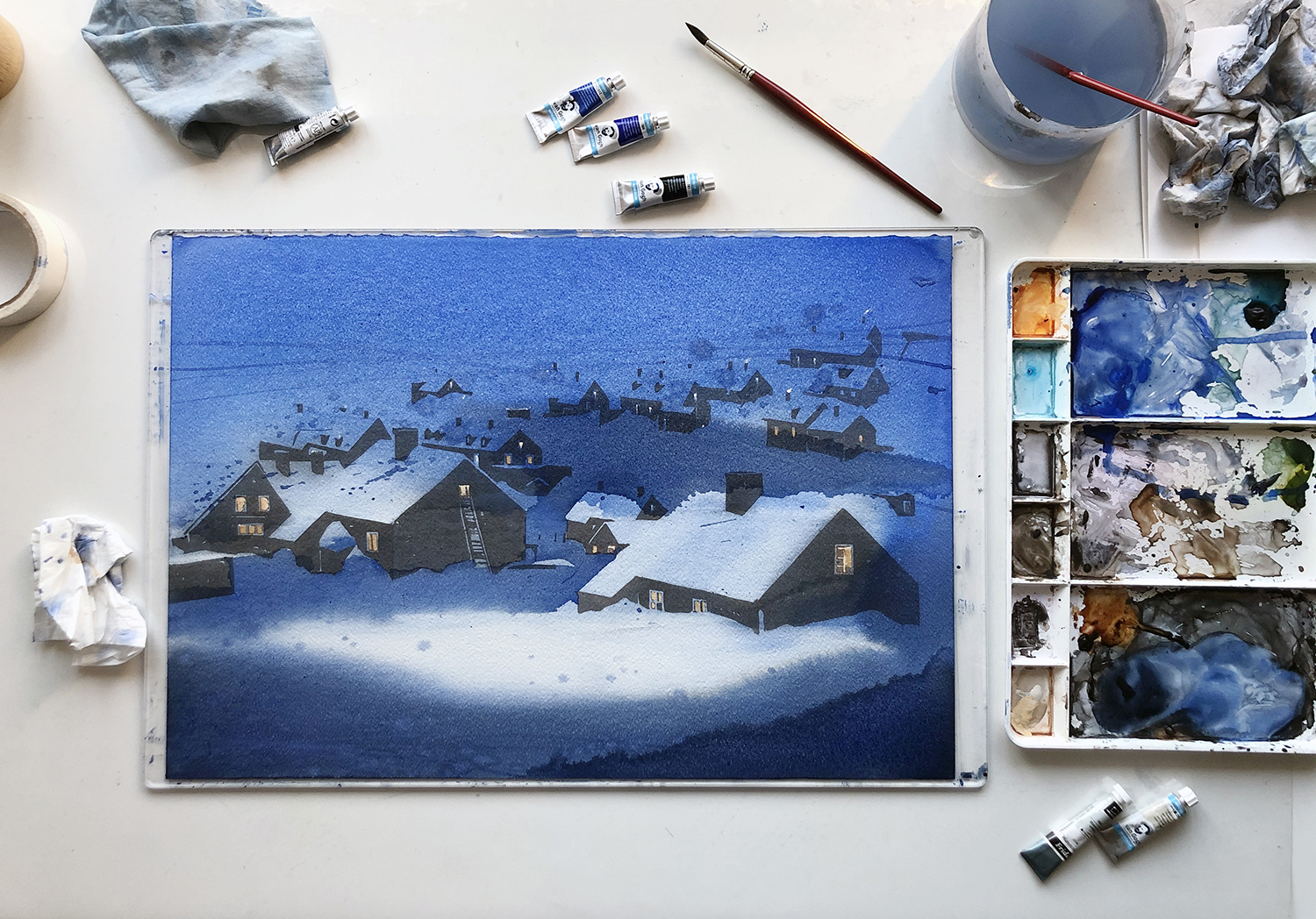
In addition to oil, I work in watercolor, and sometimes use charcoal and pastel. I've also explored natural stone mosaic.
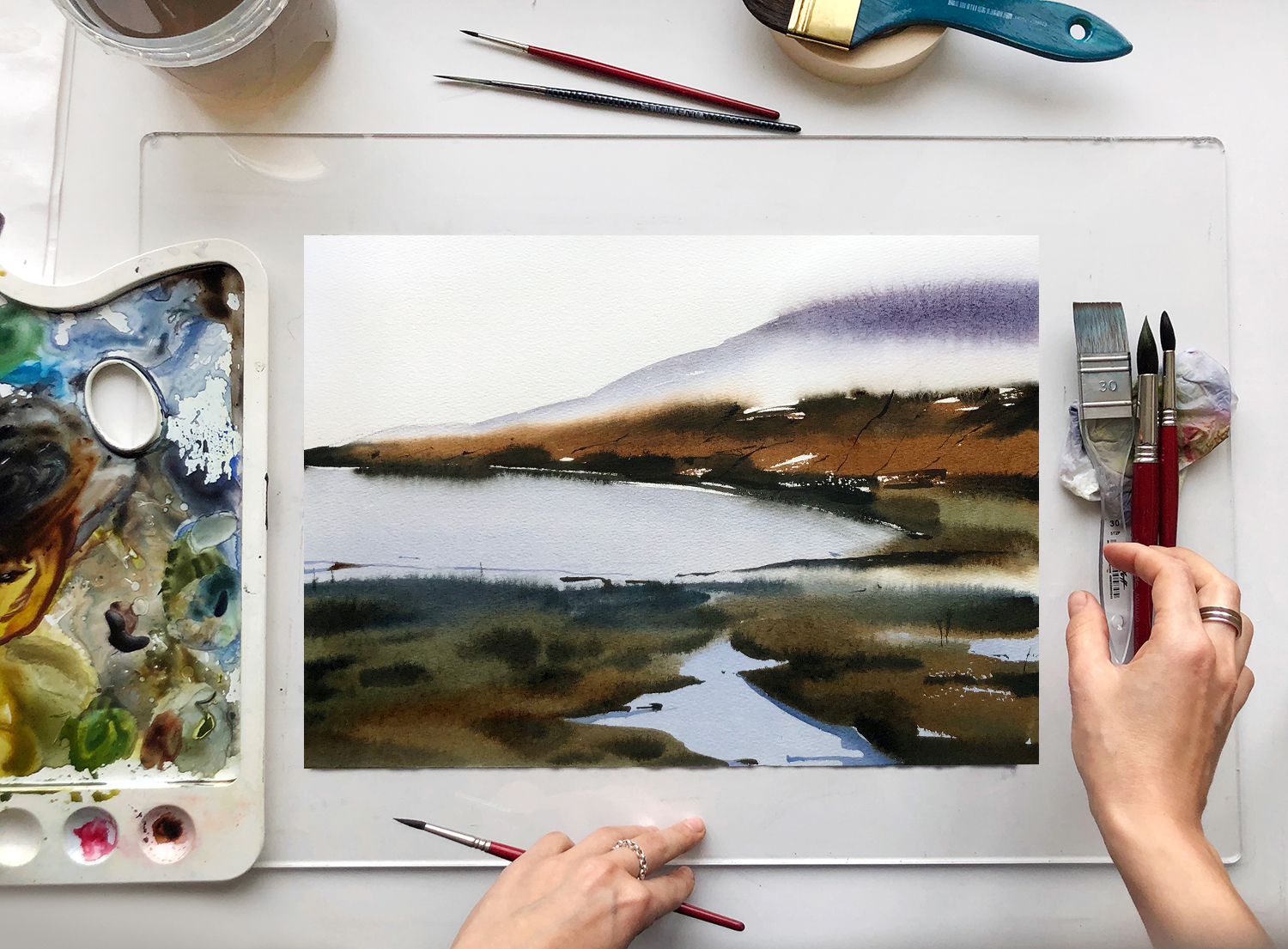
Oil and watercolor are two entirely different worlds, but both are close to me.
In watercolor landscapes, I especially value lightness, transparency, and delicate transitions. It's one of the most unpredictable techniques — and that's both its charm and its challenge. It requires confident brushwork and leaves little room for mistakes. Every movement must be precise — and there is a special beauty in that.